1. What Role Do Underpads Play in Bed Protection?
Underpads — also commonly called hygiene pads, adult care pads, or bed protection pads — are not meant to replace adult diapers. Their primary purpose is to protect the bed surface and support caregiving tasks.
In bedbound care, underpads are commonly used for:
Protecting bedsheets
Protecting mattresses
Overnight leak prevention
Changing and cleaning routines
Repositioning care
Post-surgery care
Incontinence care
Bedside care procedures
For long-term bedbound seniors, people with moderate-to-severe incontinence, post-surgery patients, and residents in care facilities, underpads add an extra layer of bed protection on top of adult diapers.
In simple terms:
Adult Diapers: Close-to-body absorption and containment
Underpads: Bed surface protection and care support
Wet Wipes / Soft Dry Wipes: Cleaning before and after changes
For this reason, underpads work best as a complementary product alongside adult diapers, adult pull-ups, and hygiene supplies — rather than as a standalone solution for incontinence protection.
2. When Are Underpads Needed?
1. Long-Term Bedbound Care
For bedbound seniors, turning, repositioning, and changing care products can be difficult, and bedsheets and mattresses are more likely to become soiled. An underpad placed beneath the hips and perineal area creates a focused protective layer.
Recommended pairing:
Adult Diapers + Underpads + Wet Wipes / Soft Dry Wipes2. Overnight Leak Prevention
Nighttime care stretches over long hours, and caregivers or family members may not always be able to change diapers right away. If urinary output is heavy or the person turns frequently during sleep, leaks are more likely.
For nighttime care:
Adult Diapers handle close-to-body absorption
Underpads protect the bed surface
This combination is more reliable than using adult diapers alone.
3. Post-Surgery Care
People recovering from surgery often have limited mobility and may need bedbound care for a period of time. Underpads can be used for bed protection, changing support, and short-term care situations.
Suitable scenarios:
Hospital companion care
Post-surgery recovery
Short-term bed rest
Temporary care needs
4. Care Facility Use
In nursing homes, care facilities, and rehabilitation centers, underpads are a frequently used consumable. They're used for long-term bedbound residents, nighttime routines, repositioning, and protecting bed units.
Common facility combinations:
Bedbound residents: Adult Diapers + Underpads
Mobile residents: Adult Pull-Ups
Daily hygiene: Wet Wipes / Soft Dry Wipes / Facial Towels
Short-term care: Adult Care Kits
3. Where Should the Underpad Be Placed on the Bed?
The underpad should be positioned to cover the hips, perineal area, and upper thighs.
Generally, the underpad doesn't need to cover the entire bed — just the areas most at risk for leaks and soiling.
Correct Placement
Top edge: Below the lower back / sacral area
Middle: Covering the hips and perineal area
Bottom edge: Extending to the upper thighs
Sides: Centered, covering potential leak areas on both sides
If the underpad is placed too high, it may only cover the lower back and miss the hips and perineal area entirely. If placed too low, it may miss the main leak zones altogether.
4. How to Place an Underpad for a Supine (Back-Lying) Position
When the person is lying on their back, the underpad should be positioned directly beneath the key protection zones.
Steps for Supine Positioning
1. Gently Help the Person Roll Slightly to One Side
The caregiver should first help the person turn slightly to one side, avoiding any pulling or forceful movement.
2. Tuck Half of the Underpad Under the Body
Unfold the underpad horizontally and gently tuck one half beneath the person's hip area.
3. Help the Person Roll Back to a Supine Position
Once the person is comfortably back on their back, pull the underpad smooth from the other side.
4. Adjust the Underpad Position
Make sure the underpad covers:
The hips
The perineal area
The upper thighs
Any areas of the bed prone to soiling
5. Keep It Flat and Wrinkle-Free
Once in place, check that the underpad lies flat — no curled edges, wrinkles, or shifting.
5. How to Place an Underpad for a Side-Lying Position
When the person is lying on their side, the underpad can shift due to changes in body pressure. If the pad isn't positioned correctly, it may fail to cover the back of the hips and the perineal area.
Key Points for Side-Lying Placement
Shift the underpad slightly toward the back and behind the hips
Cover the hips, perineal area, and pressure points
Extend the lower edge of the pad to the upper thighs
Avoid curled edges or wrinkles
If a side-lying person frequently experiences side leaks, consider:
Repositioning the underpad
Extending the coverage area
Checking the adult diaper size and fit
Increasing change frequency when needed
6. Common Mistakes When Using Underpads
1. Placing It Too High
If the top edge of the underpad is too high, it mainly covers the lower back and fails to protect the hips and perineal area.
Potential problems:
Main leak zones left uncovered
Bedsheets still get soiled
Reduced protection where it matters most
2. Placing It Too Low
If the underpad sits too low — only covering the thighs or knees — the hip area is left unprotected.
Potential problems:
Hips and perineal area exposed
Poor overnight leak protection
Caregivers need to change bedsheets more often
3. Not Shifting the Pad for Side-Lying
If the person is on their side but the underpad stays centered, it may miss the direction where side leaks typically occur.
Potential problems:
Higher risk of side leaks
Insufficient protection behind the hips
Localized soiling of bedsheets
4. Wrinkles or Curled Edges
If the underpad isn't laid flat and develops wrinkles, folds, or curled edges, it affects both comfort and protection.
Potential problems:
Discomfort for the person
Skin pressure points
Reduced absorbent coverage
Liquid flowing toward the edges
7. Three Tips for Preventing Side Leaks with Underpads
1. The Folding Method
For mild leakage or short-term care, gently fold the side edges of the underpad inward to create shallow side barriers.
Best for:
Mild-to-moderate leakage
Short-term bed protection
Temporary care situations
Things to watch for:
Don't fold the edges too high
Don't compromise the person's comfort
Avoid folded edges pressing into the skin
2. The Double-Layer Method
For nighttime care or moderate-to-severe incontinence, place a second underpad on top of the first, centered over the main leak zone.
Best for:
Nighttime care
Moderate-to-severe incontinence
Extended bedbound periods
High bed-protection requirements
Key points:
Top layer covers the core leak zone
Bottom layer extends the protection area
Keep both layers flat
Avoid stacking too thick, which can reduce comfort
3. The Edge-Tuck Method
During side-lying care, gently tuck one edge of the underpad into the area where the body meets the bed, or behind the hips, for added lateral protection.
Best for:
Side-lying care
Post-repositioning care
Situations where the pad tends to shift
People at higher risk of side leaks
Things to watch for:
Don't tuck too deep
Don't create wrinkles
Don't restrict the person's ability to turn or their comfort
8. Should Underpads Be Used with Adult Diapers?
For bedbound seniors, nighttime care, and moderate-to-severe incontinence, underpads and adult diapers are generally recommended together.
Recommended Combination
Adult Diapers + UnderpadsAdult diapers handle close-to-body absorption, while underpads protect the bed surface. Together, they reduce soiling of bedsheets and mattresses.
For mobile seniors during the day, the following may be more suitable:
Adult Pull-Ups + Wet Wipes / Soft Dry WipesFor short-term hospital stays or post-surgery care, consider:
Adult Care Kit9. How Often Should Underpads Be Changed?
There's no fixed schedule for changing underpads — it depends on the situation.
Change the underpad when:
It's visibly damp
There's an odor
The surface is soiled
The pad has curled or shifted
The person feels uncomfortable
After overnight care
After repositioning or changing an adult diaper
In care facilities or for long-term bedbound individuals, caregivers should check the underpad at regular intervals. Don't wait until the bedsheets are soiled before replacing it.
10. What to Look for When Choosing Underpads
1. Size
The underpad should be large enough to cover the hips, perineal area, and upper thighs. If it's too small, coverage is insufficient; if it's too large, it may be harder to position.
Common sizes based on care needs:
Small: Spot care or short-term protection
Medium: Routine bedbound care
Large: Nighttime care, long-term bedbound use, and full bed protection
2. Absorbency
The underpad's absorbency should match the care scenario. For nighttime care, long-term bedbound use, and moderate-to-severe incontinence, choose a product with more reliable absorbency.
3. Surface Comfort
The top layer of the underpad comes into contact with the person's body, so softness and dryness matter. Bedbound seniors often have fragile skin, so prolonged dampness and friction should be avoided.
4. Waterproof Backing
The bottom layer of the underpad should act as a barrier to prevent liquid from seeping through to the bedsheets and mattress.
5. Ease of Placement
An underpad should be easy to unfold, lay flat, and adjust. If it curls or wrinkles too easily, it can make caregiving more frustrating.
11. What Should Care Facilities Keep in Mind When Using Underpads?
Care facilities should focus on standardized procedures and supply reliability when using underpads.
Facilities are advised to consider:
Whether the underpad size fits the bed type
Whether it's suitable for long-term bedbound residents
Whether it's easy for caregivers to place and change
Whether it works well alongside adult diapers
Supply consistency
Bulk purchasing options
Availability of clear product documentation
Facilities shouldn't rely on a single product type. Instead, they should configure products based on residents' individual needs:
Long-term bedbound residents: Adult Diapers + Underpads
Mobile residents during the day: Adult Pull-Ups
Hygiene care: Wet Wipes / Soft Dry Wipes / Facial Towels
Short-term stays: Adult Care Kits
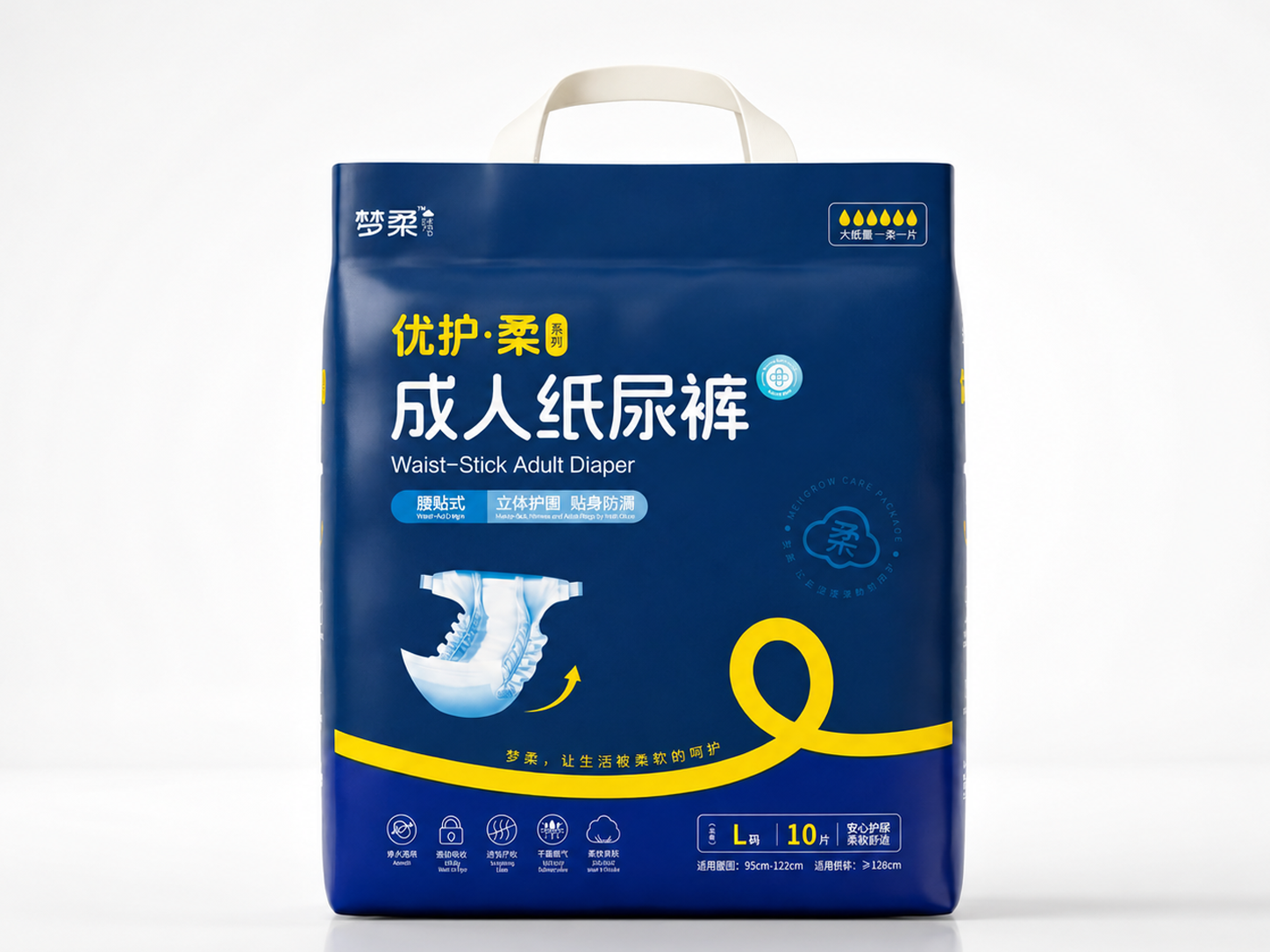
Mengrou Care, a brand under Huayi Medical Technology, offers a full range of products including adult diapers, adult pull-ups, underpads, wet wipes, soft dry wipes, facial towels, and adult care kits — supporting home care, senior living facilities, medical institutions, retail channels, and corporate procurement with product materials and partnership options.
12. Tips for Home Caregivers Using Underpads
In home care settings, underpads can significantly reduce the cleaning burden. Especially when caring for a bedbound senior, underpads are recommended in these situations:
Nighttime care
Long-term bedbound care
Changing and cleaning routines
Post-surgery recovery
Frequent bedsheet soiling
The person can't turn over independently
For home care, it's helpful to have these on hand:
Adult Diapers
Underpads
Wet Wipes
Soft Dry Wipes
Disposable Bags
Spare Bedsheets
When changing:
Be gentle
Avoid pulling or dragging the person's body
Position the pad accurately
Keep the underpad flat
Clean the skin promptly
Replace soiled underpads right away
13. The Bottom Line: Underpads Are Essential for Bed Protection
The core role of underpads is to protect bedsheets, mattresses, and care areas — reducing leak-related soiling and the burden of cleaning.
To use underpads correctly:
Position them accurately
Cover the hips and perineal area
Keep them centered
Lay them flat without wrinkles
Adjust based on body position
Pair with adult diapers when needed
For long-term bedbound care, nighttime routines, moderate-to-severe incontinence, post-surgery care, and facility-based care, underpads should typically be used alongside adult diapers. For mobile seniors during the day, adult pull-ups paired with wet wipes and soft dry wipes may be more appropriate.
Mengrou Care, a brand under Huayi Medical Technology, offers a full lineup of adult diapers, adult pull-ups, underpads, and hygiene products — providing product materials and partnership options for home care, senior living facilities, medical institutions, and channel partners.