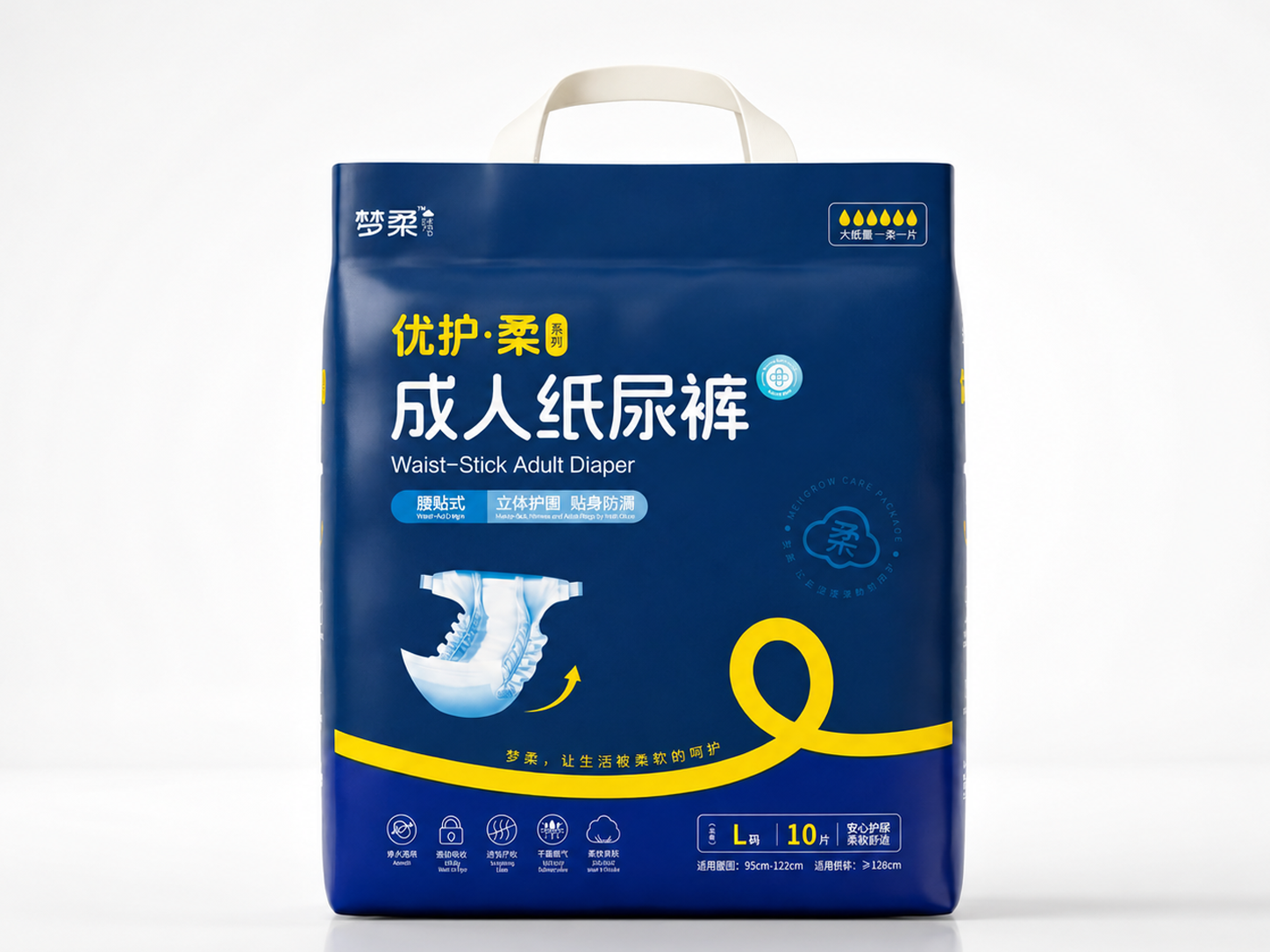
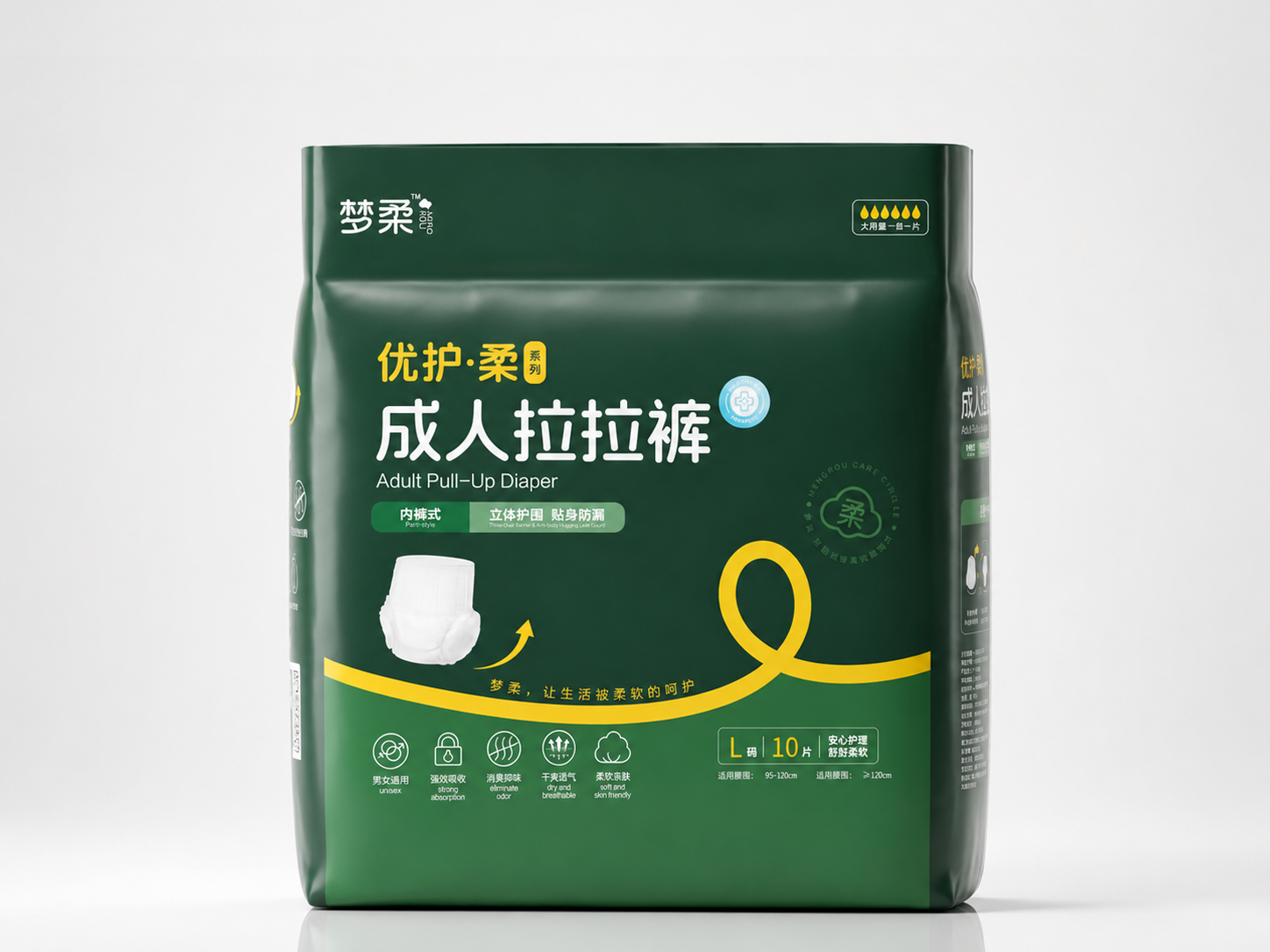
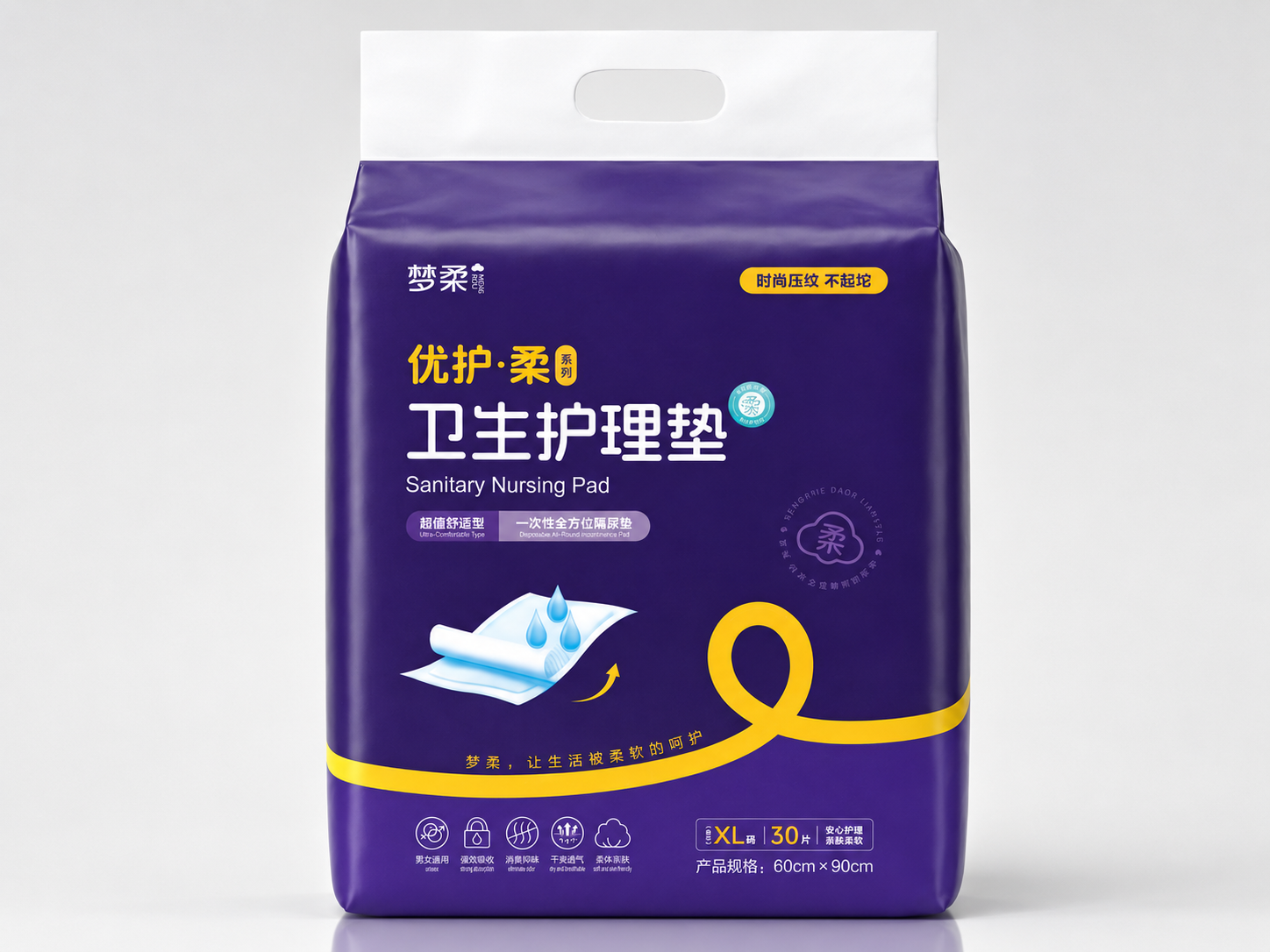
Core Conclusion: Adult diapers, adult pull-ups, and underpads are not different names for the same product; they are adult care items designed for different care scenarios. The fundamental selection logic is: first assess the user's mobility, then consider the time of use, and finally evaluate the level of incontinence. For long-term bedridden elderly with moderate to severe incontinence, adult diapers are the priority; for those who can move independently with mild to moderate incontinence, adult pull-ups are preferred; underpads must be used as a supplementary bed protection aid, not a substitute.
1. Why Can't You Just Pick Any? Core Differences of the Three Product Categories
Many first-time buyers of adult care products tend to confuse adult diapers, adult pull-ups, and underpads, assuming anything that "can absorb" will do. In reality, the usage logic of these three product types is completely different. Choosing the wrong product can lead to inconvenient donning and doffing, inadequate leakage protection, soiled sheets and mattresses, discomfort for the elderly, and increased long-term care costs.
Comparison Table of Core Differences
| Comparison Item | Adult Diapers | Adult Pull-Ups | Underpads |
|---|---|---|---|
| Primary Function | Close-body absorption care | Daytime activity & outings protection | Bed surface protection & care assistance |
| Suitable Users | Long-term bedridden, mobility-impaired, moderate to severe incontinence | Mobile, mild to moderate incontinence | Bed care, nighttime leak protection, mattress protection needs |
| Wearing Method | Opened and taped to secure | Pulled on and off like underwear | Laid flat on the bed or care area |
| Best Used For | Nighttime, bed care, post-surgery | Daytime, outings, daily activities | Nighttime, bed care, changing assistance |
| Can Be Used Alone? | Yes | Yes | No, requires combination with diapers or pull-ups |
Each Addresses Different Scenarios
- Adult Diapers: Address bed care, nighttime care, moderate to severe incontinence, and assisted changing.
- Adult Pull-Ups: Address daytime activities, outings, privacy and convenience for those who can move independently.
- Underpads: Address bed surface protection, changing assistance, nighttime leak prevention, and care procedure support, reducing sheet and mattress soiling and easing caregiver cleaning burden.
2. Determine by Mobility: Bedridden Seniors Use Diapers, Mobile Seniors Use Pull-Ups
The first step in selecting adult care products is assessing whether the user can move independently.
1. Long-term Bedridden or Mobility Impaired: Prioritize Adult Diapers
Suitable Users: Long-term bedridden elderly, mobility-impaired individuals, post-surgery recovery patients, moderate to severe incontinence, those requiring caregiver assistance for changes, elderly in high-care-level nursing homes.
Advantages: Easy to change while in bed, suitable for nighttime care and moderate to severe incontinence, easier for caregivers to assist. Can be paired with underpads for enhanced bed protection. For nursing homes, care facilities, and rehabilitation centers, adult diapers are typically high-frequency essentials in basic care.
2. Able to Move Independently: Prioritize Adult Pull-Ups
Suitable Users: Elderly who can move independently, mild to moderate incontinence, those active during the day, those needing outings protection, and those who value privacy.
Advantages: Easy to put on and take off, fits well during movement, offers good privacy. Suitable for daytime activities, walks around the facility, medical visits, short shopping trips, and rehabilitation training.
3. Bed Protection Needed: Always Combine with Underpads
Underpads are not a substitute for adult diapers or pull-ups; they are bed protection products. They are mainly used for bed surface protection, changing assistance, nighttime leak prevention, turning care, post-surgery care, and care procedure support. In scenarios involving long-term bed rest, nighttime care, or moderate to severe incontinence, underpads are often used together with adult diapers to reduce sheet and mattress contamination and ease caregiver cleaning workload.
3. Time-Based Pairing: Pull-Ups During the Day, Diapers + Underpads at Night
Different times of day have different requirements for care products.
1. Daytime Use: Adult Pull-Ups Are More Convenient
Daytime involves more activity—seniors may need to get out of bed, use a wheelchair, go to the bathroom, take a walk, or eat. Adult pull-ups better meet daytime care needs, with easy donning and doffing like underwear, freedom of movement, and good privacy.
2. Nighttime Use: Adult Diapers + Underpads Are More Reliable
Nighttime care lasts longer, users change less frequently, and there is a risk of leakage due to turning. Recommended combination: Adult diapers + underpads. Adult diapers handle absorption and close-body protection, while underpads protect the bed surface. This combination is ideal for long-term bedridden users, those with heavy nighttime urine output, or when caregiver nighttime change frequency is limited.
3. Outings: Adult Pull-Ups Are Better Suited
When going out, users care most about ease of dressing/undressing, privacy, and natural movement. Adult pull-ups closely resemble regular underwear, making them suitable for medical visits, walks, and shopping.
4. Five Key Points for Choosing Adult Diapers
For bedridden seniors, selecting adult diapers requires comprehensive evaluation of the user's condition. The following five points are indispensable:
- Check Absorbency: For daytime, focus on absorption speed and surface dryness; for nighttime, focus on capacity, anti-reflux capability, and side leakage barriers. If nighttime urine output is high, pair with underpads.
- Check Leakage Protection: Pay special attention to leg leak guards, waist fit, and side fastening methods. Leak guards are especially critical when seniors lie on their sides for long periods or turn frequently.
- Check Correct Size: Too large can cause side leakage and shifting; too small can cause pressure and discomfort. Key references are waist, hip, and weight ranges. For larger body types or those with extensive turning, try samples first.
- Check Skin-Friendliness and Breathability: Bedridden seniors have prolonged skin pressure. If the diaper stays wet, rubs, or lacks breathability, skin discomfort risk increases. Look for a soft top sheet, minimal reflux, and a relatively dry feel.
- Check Ease of Changing: Caregiver convenience matters. A suitable bed diaper should be easy to open, position, fasten on both sides, and change during turning.
Frequently Asked Questions (FAQ)
Q1: What is the difference between underpads and waterproof bed pads?
Answer: Waterproof bed pads focus more on "blocking"—preventing liquid from seeping through. Underpads focus on "absorbing + blocking"—quickly absorbing and locking in liquid, then preventing both reflux and seepage. Underpads are specifically designed for adult incontinence, with absorbency starting at 500ml and a more complex structure (4-layer composite: skin-friendly top sheet, distribution layer, superabsorbent polymer core, waterproof backing), making them more suitable for long-term bedridden seniors.
Q2: What size underpads should I choose for a bedridden senior?
Answer: 60×120cm (large) is the top choice for bedridden seniors. The width just covers from left to right waist, and the length extends from the waistline to mid-thigh. For seniors over 80kg, with large turning range, or severe incontinence, 80×120cm (extra large) is recommended. 60×90cm (medium) is better for wheelchair use or short-term application.
Q3: Can diapers and pull-ups be used interchangeably?
Answer: Yes, you can flexibly combine them. If a senior can occasionally get out of bed during the day but is bedridden at night, consider: wear adult pull-ups during the day and use adult diapers + underpads at night. This balances daytime mobility with nighttime protection.
Q4: What should I do if the senior frequently has side leaks?
Answer: First check if the size is correct and ensure proper waist and leg fit; increase change frequency; add underpads when necessary. If the senior sleeps mostly on one side, adjust the underpad to shift toward the weight-bearing side when in side-lying position.
Q5: What cleaning supplies should I prepare for the care process?
Answer: Perform a 3-step cleaning at each change: wipe with warm water → pat the skin dry → check skin condition. Prepare wipes, soft towels, and gentle cleansers. For outings or short hospital stays, pack spare pull-ups, wipes, disposable bags, and underpads.
Conclusion
The core principle for preparing home care supplies for the elderly with disabilities is: First assess mobility, then choose product type, and finally match by scenario. Specific action steps:
- Evaluate the senior's mobility: Long-term bedridden / moderate to severe incontinence → adult diapers; able to move independently / mild to moderate incontinence → adult pull-ups.
- Configure by time of day: Daytime use pull-ups (suitable for activity), nighttime use diapers + underpads (enhanced protection), outings use pull-ups (convenient and private).
- Underpads are essential auxiliaries: Especially for bed care and nighttime leak prevention. Never substitute waterproof bed pads for underpads. Recommended combination: adult diapers + underpads (60×120cm or 80×120cm) + wipes/soft towels.
- Focus on five core aspects when selecting products: absorbency, leakage protection, correct size, skin-friendliness and breathability, and ease of changing.
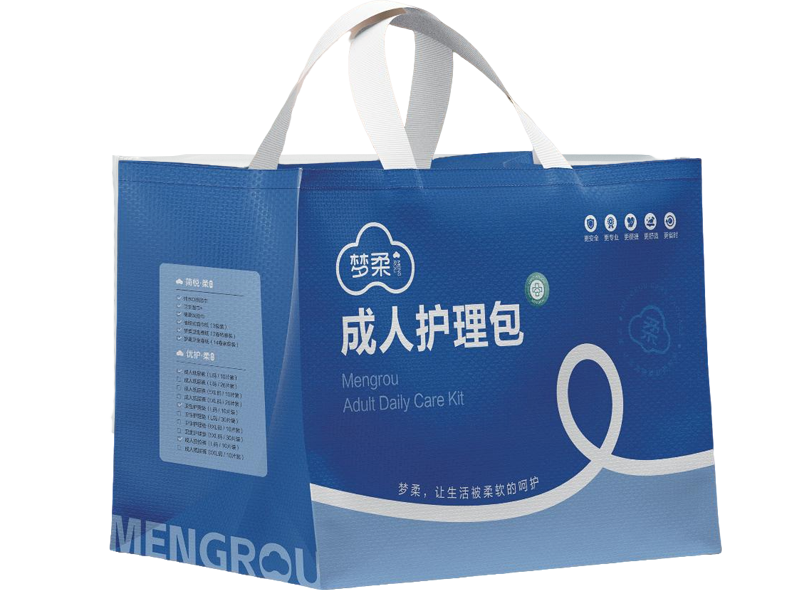
- Look for trusted brands and professional products: For example, Mengrou Care brand under Huayi Medical Technology, offering adult diapers, adult pull-ups, underpads, wipes, soft towels, and adult care kits, providing professional solutions for home care, nursing homes, and medical care settings.